


Florence needs no advertising or propaganda, and overtourism has had a massive impact on the city, especially in the past five years. Florence’s main economy has been tourism for two centuries, but today’s standard itinerary revolves around the viral spots: the wine windows, the affogato, the sandwich, and David. I recommend skipping all of that except for David. But maybe also skip David, because Florence has an embarrassment of riches for those who want to experience awe and wonder.
The best reason to visit Florence is to experience its art and architecture. If you’re not open to visiting churches and museums, honestly, don’t go to Florence. Italy’s twenty regions are so wildly diverse that you should always prioritize the experience you want to have first, then choose the city or region where you can best have that experience. Florence and Tuscany have become icons of Italy’s tourism market, but that doesn’t mean they are universally enjoyed or are “the best.”
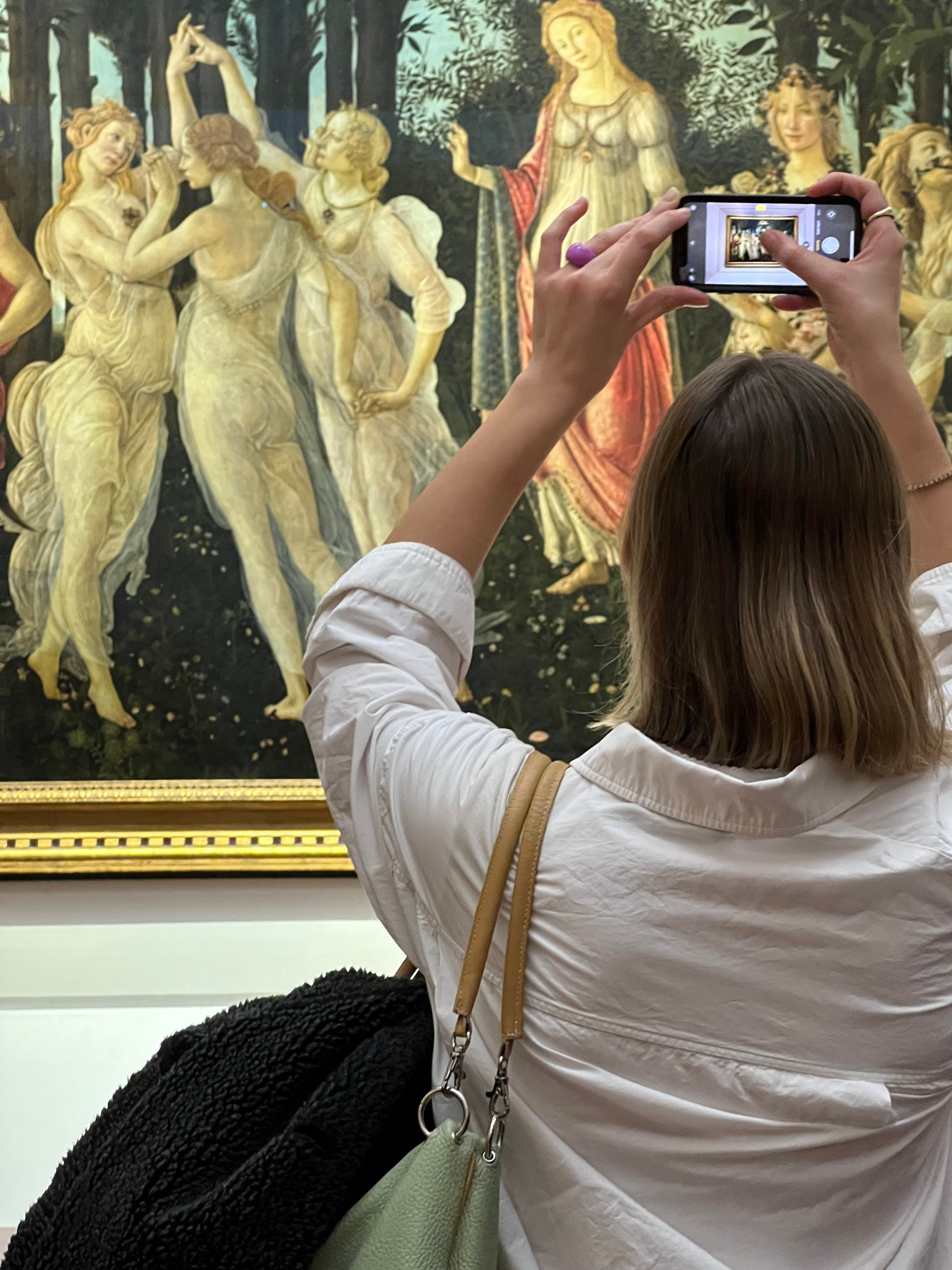
The Basics
Florence is small and completely walkable. As a tourist, you won’t need to leave the historic center, the centro storico. The Arno River runs through the center, and the biggest concentration of sites is around the Duomo, in a pedestrianized zone where you’ll also find the biggest crowds of tourists, day trippers, and bus tours. The other side is called the Oltrarno, and (generally) it’s calmer, quieter, more residential, and more hip, especially if you’re in the neighborhood called San Frediano. But Florence is not a cutting-edge city; it has been a city of art and history lovers and students for over two centuries, always with a large population of English speakers.
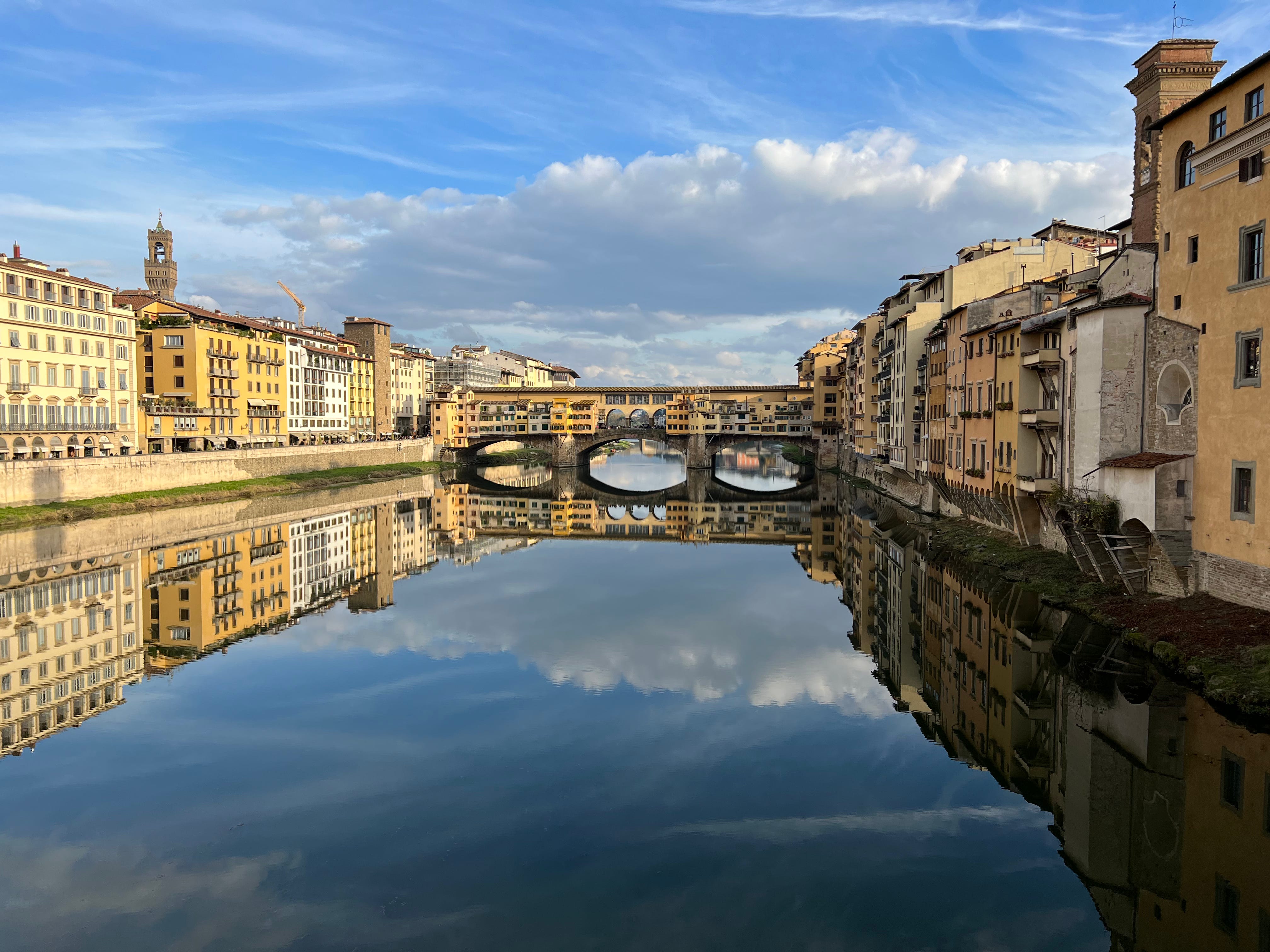
What’s special about Florence:
The cradle of the Renaissance
Small and very walkable. If you’re a good walker, you may never even need a taxi or bus, other than getting to and from the train station with your luggage
Long history of being hospitable to foreign residents and students
Easy access to the Tuscan countryside
The challenges:
Over-tourism is a huge problem, largely accelerated by short-term apartment rentals. You have to be prepared for large crowds and be thoughtful about which sites you want to see, so that you can buy tickets in advance. Definitely invest in good tours. You should also make dinner reservations if you want to ensure you eat well, which you can definitely do in Florence, but not spontaneously unless you’re already very familiar with Tuscan cuisine.
Best time to go: Winter. Yes, it’s very cold, but the crowds are significantly less, and Florence in the summer can be unbearable. The city is ringed by the Chianti Hills, which are beautiful, but that also means it’s extremely hot in summer; the mosquitoes coming off the Arno should have EasyJet emblazoned on their sides; and the air pollution sometimes hangs over the city.
The Three Most Famous Sites
The Duomo. You can always orient yourself in Florence by looking up to see where you are in relation to the red brick dome. It’s an engineering marvel, begun in 1296 and completed in the late 1400s. The word “duomo” means cathedral, not dome, even though Florence’s cathedral is famous for its dome. The word comes from the Latin word domus, meaning house, or in this context, God’s house. Think of it as a spiritual football stadium, designed to bring the entire city together within a medieval vision of the kingdom of God.
The Duomo is the starting point for understanding Florence and why it became the cradle of the Renaissance. I strongly recommend that a visit to the Museo dell’Opera del Duomo should be on your first full day in the city, so you have context for everything you will see afterward. (Don’t worry, these details are all in the five-day itinerary down below.)
Also, the genius of the freestanding red-brick dome is attributed to Fillipo Brunelleschi, but recent research has revealed that the innovation originated in medieval Persia. Florence was rich largely due to textiles, and the rich history of weaving and carpets, particularly near Tabriz, included large networks of Florentine merchants. The innovation of the double-shell dome comes from the Dome of Soltaniyeh, with the signature herringbone pattern appearing in several other domes from about a century earlier in Persia. It’s fascinating, and here’s a podcast episode you can listen to about it: Ep. 37: The Secret of Florence’s Dome
Michelangelo’s David. One of the most famous works of art in the history of everything, and one of those pieces that, when you see it in real life, is way better. It’s in the Accademia, which is still an art school, and it is a madhouse to get in. Do not wing it with David. Get skip-the-line tickets. Book a tour. They release tickets in batches, so you have to book far enough in advance, but not too far. Make sure it’s on your trip-planning to-do list.
The Uffizi. One of the world's most famous art museums. Uffizi means “the offices” — these were all part of the Medici family’s home offices. It really is like walking through an art history textbook. That said, if you’re not familiar with the Renaissance and you don’t love museums, skip the Uffizi and see the art in churches instead. Being able to see iconic works of art in their intended setting is the real opportunity in Italy.
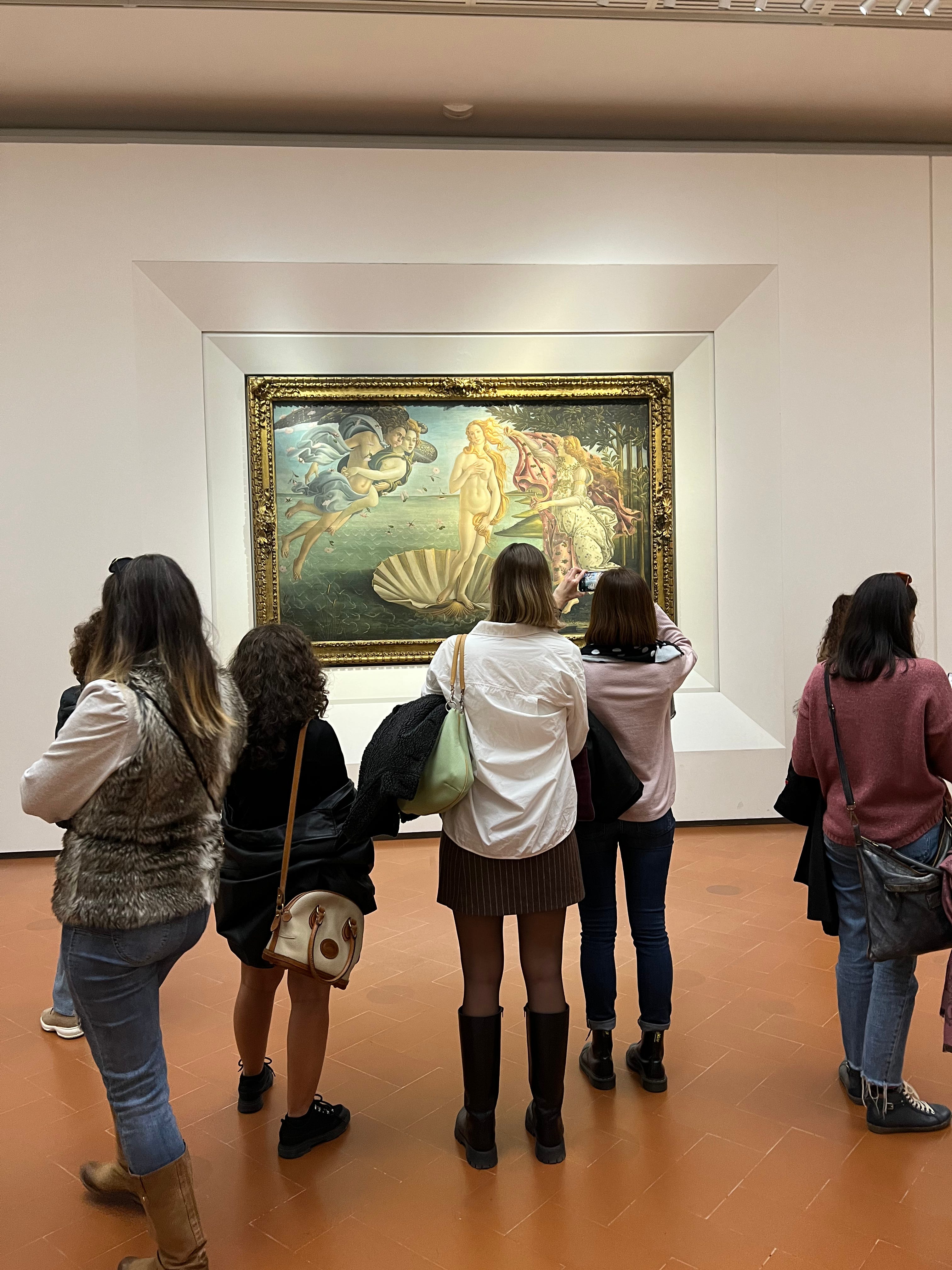
If you’re going during high season, pay for early-morning tickets because it gets really hot inside. The most famous work there is Botticelli’s Birth of Venus, and like David, it is extra special when you see it in person.
Food
Don’t go to Florence for pizza and pasta. I know that sounds ridiculous, but Italian food is different from region to region, and what we call “Italian food” outside of Italy is mostly from Naples. Trust me, you can have far better pizza in New York than you can in Florence.
Tuscans love their beans, vegetables, bread, and wild boar. They’re jokingly called mangia fagioli, the bean eaters, and a dish of white beans drowned in Tuscan olive oil and punctuated with a sprig of rosemary is to me the signature taste of Florence.
Tuscan dishes to try:
Ribollita — a soup with lots of vegetables and stale bread
Pappa al Pomodoro — mushy stale bread with tomatoes and basil, which doesn’t sound good, but I promise you it’s delicious
Pici — pici are a type of pasta, hand-rolled noodles that sometimes have the texture of Udon. You’ll find them dressed with rich sauces, such as porcini mushrooms, or sometimes with stewed cinghiale (wild boar). It’s also common to have a wild boar ragù with pappardelle, which are flat, wide-cut noodles.
Bistecca Fiorentina — thick cut from a specific Chianina cow, lean, cooked and served very rare (essentially raw in the center). If you like your steak well done, don’t get one. It’s not the tradition.
Crostini Toscano— chicken liver pâté smeared on toasted bread. Looks like cat food, tastes like heaven.
Schiacciata — like focaccia but thinner, crunchier, and with more olive oil. Get it fresh out of the oven at Pugi.
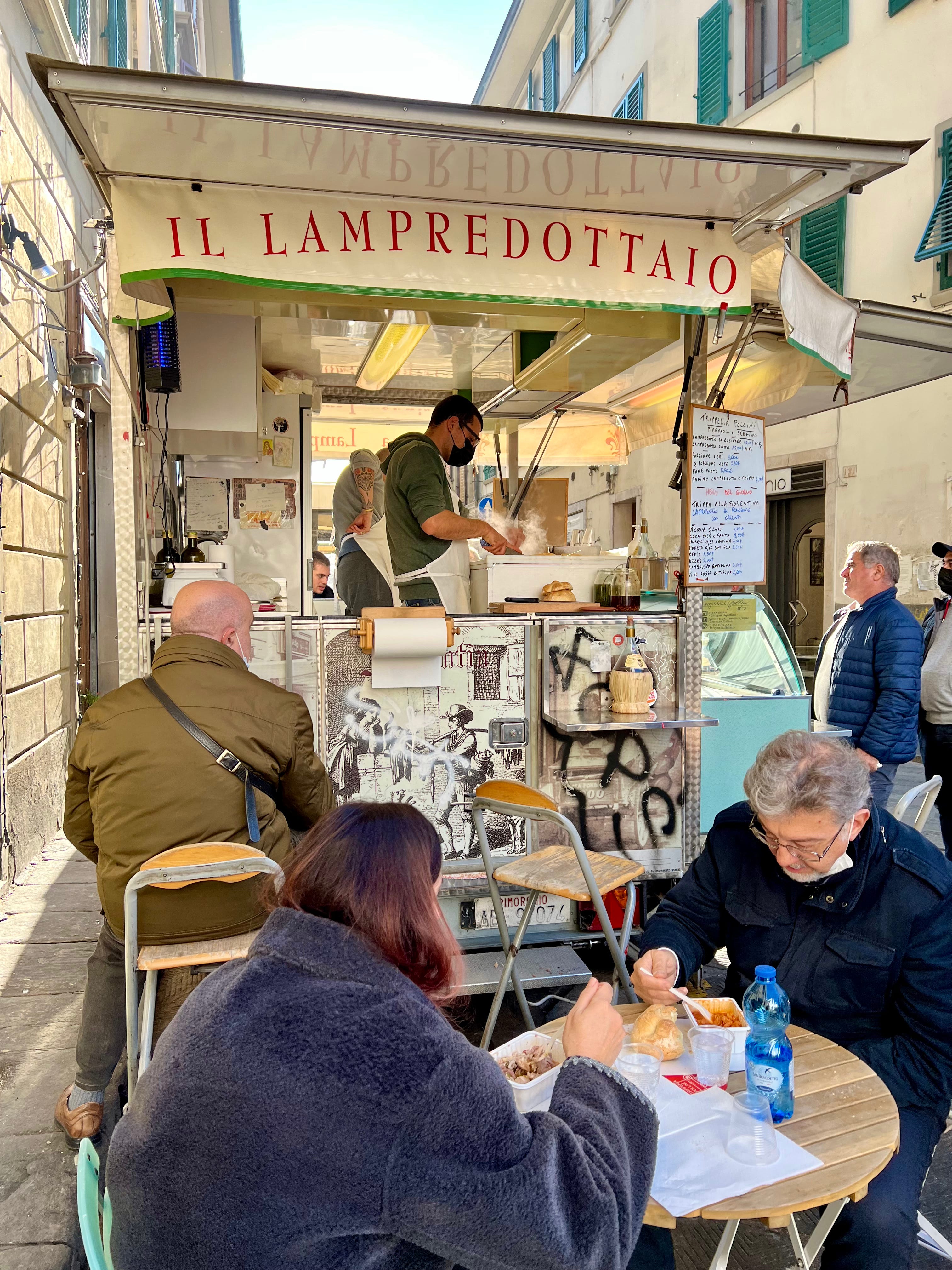
Lampredotto sandwich — this is where I lose some of you. Lampredotto is the fifth stomach of a cow. This is the food of the poor; the nobles got everything else, and this was truly what was left. It’s called lampredotto because the texture is that of a lamprey eel, because eels were the thing to eat during the Renaissance; all the wealthiest people ate them, and this was the poor man’s version. I know none of that was much of an endorsement, but a lampredotto sandwich tastes like a really good roast beef sandwich. What makes it delicious is the salsa verde, a sauce made with capers, anchovies, parsley, olive oil, and day-old bread, all blended together. There are a few food trucks around the city that serve it, and my favorite is listed in the itinerary.
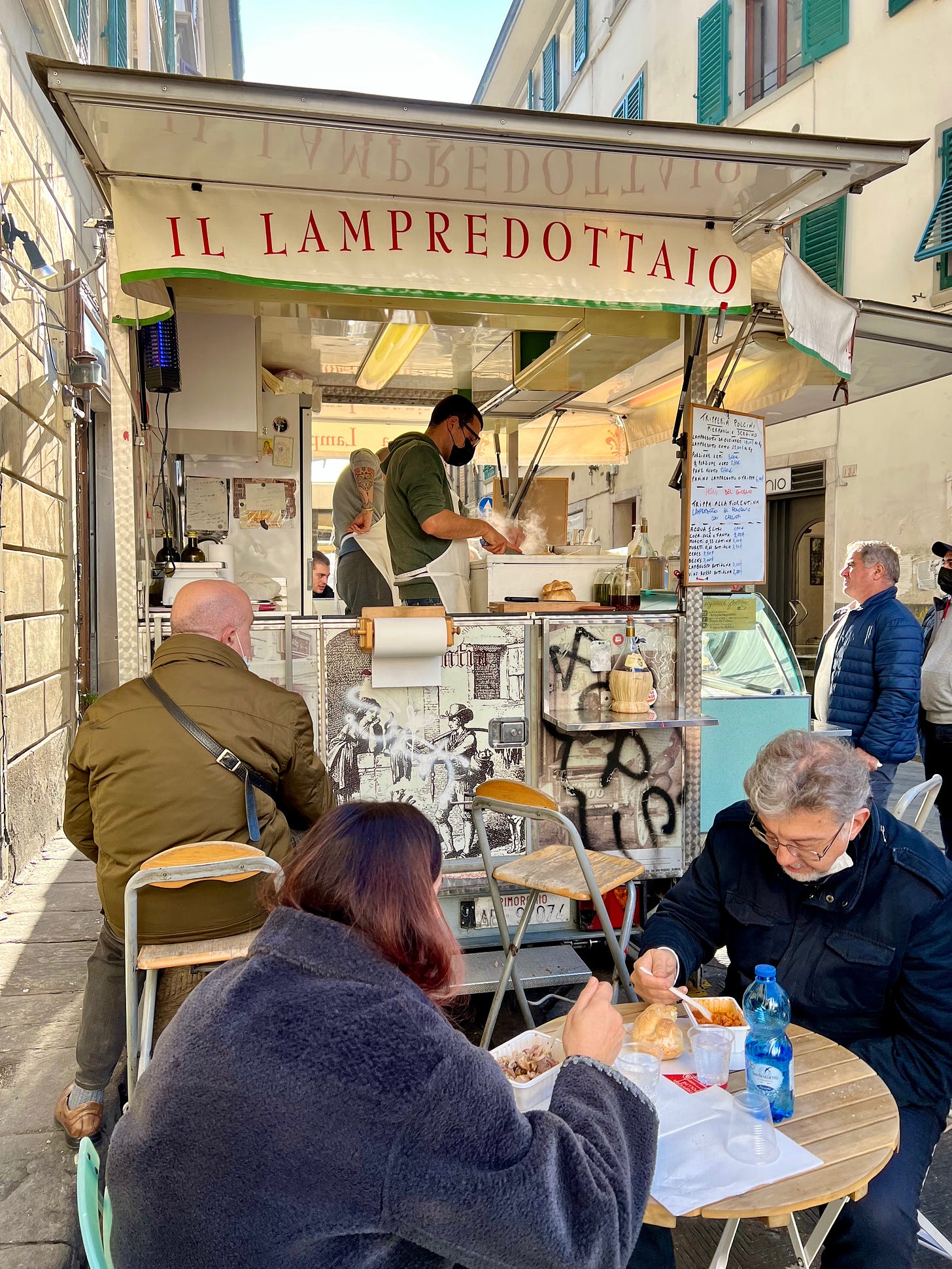
My personal favorite lampredotto truck is Pollini near the church of Sant’Ambrogio Olive oil - while not a dish, I personally think Tuscany produces the most flavorful olive oil in Italy. Pane Toscano is the local bread, unsalted, but it’s best for mopping up high-quality olive oil and enjoying the magic of simplicity. In late fall, Tuscans go crazy for cavolo, what we call dinosaur kale, topped with freshly pressed olive oil.
The Markets:
The Mercato Sant’Ambrogio is my favorite. It’s much more traditional than the Mercato Centrale. Have lunch at Trattoria da Rocco, a little stand inside the market. It’s like a diner, no frills, and you’ll see lots of Florentines on their lunch break. Outside the market, vendors sell vintage clothing; I have some amazing cashmere sweaters from here. All of this happens in the morning.
The Mercato Centrale on the ground floor still has vegetables, meat, and cheese. The upper floor is more of a food court catering largely to students who want tacos and an international array of food. If you’re traveling with picky teens, this will be a good stopping point, but if you want traditional Florentine, choose Sant’Ambrogio.
Tourist Traps
Antico Vinaio. I probably can't dissuade you from waiting in this very long line because the FOMO is intense, but let me just offer that they also have locations in New York’s Times Square and Dubai, so you be the judge, ok? Also, it might take you a few days to desalinate after eating one.
That wine window. There are many wine windows, and the one featured on Stanley Tucci’s Searching for Italy has become a social media postcard. Don’t worry about getting a photo of that one, but do keep your eyes open for them around the city. They are a charming detail, and looking for them helps attune your eye to the architecture.
Vivoli’s affogato. I am very pro-affogato. Gelato drowned in a shot of espresso is among the most pleasurable taste experiences ever, but you do not have to go to Vivoli to get it. Their gelato is excellent, and this is not a criticism of their business whatsoever. But you can go to any gelateria and get an affogato. It’s just gelato drowned in a shot of espresso. It’s an Italian thing, not just a Vivoli thing, but elsewhere most non-Italians just don’t think to ask for it.
Trattoria Zaza. Famous because…I have no idea why. At least since 1997, when I first heard about it, it was not good. I actually sat down and had dinner there in 2021 to see if I was being a judgey jerk, and no, it was still awful.
The San Lorenzo leather market. Once upon a time, this was a good market, but it’s not anymore. The leather largely comes from India or Bangladesh, and it uses many toxic dyes. Good leather shops in Florence exist; they’re in actual shops and workshops, and they’re not cheap because it’s skilled artisan work.
If you appreciate my candidness, please subscribe. Getting traction on social media means being a slave to the algorithms. Substack is the place where I can tell you the truth. All my podcast episodes are free, but the Destination Deep Dives and resources are for paid subscribers.
Just Beyond the Gates of Florence
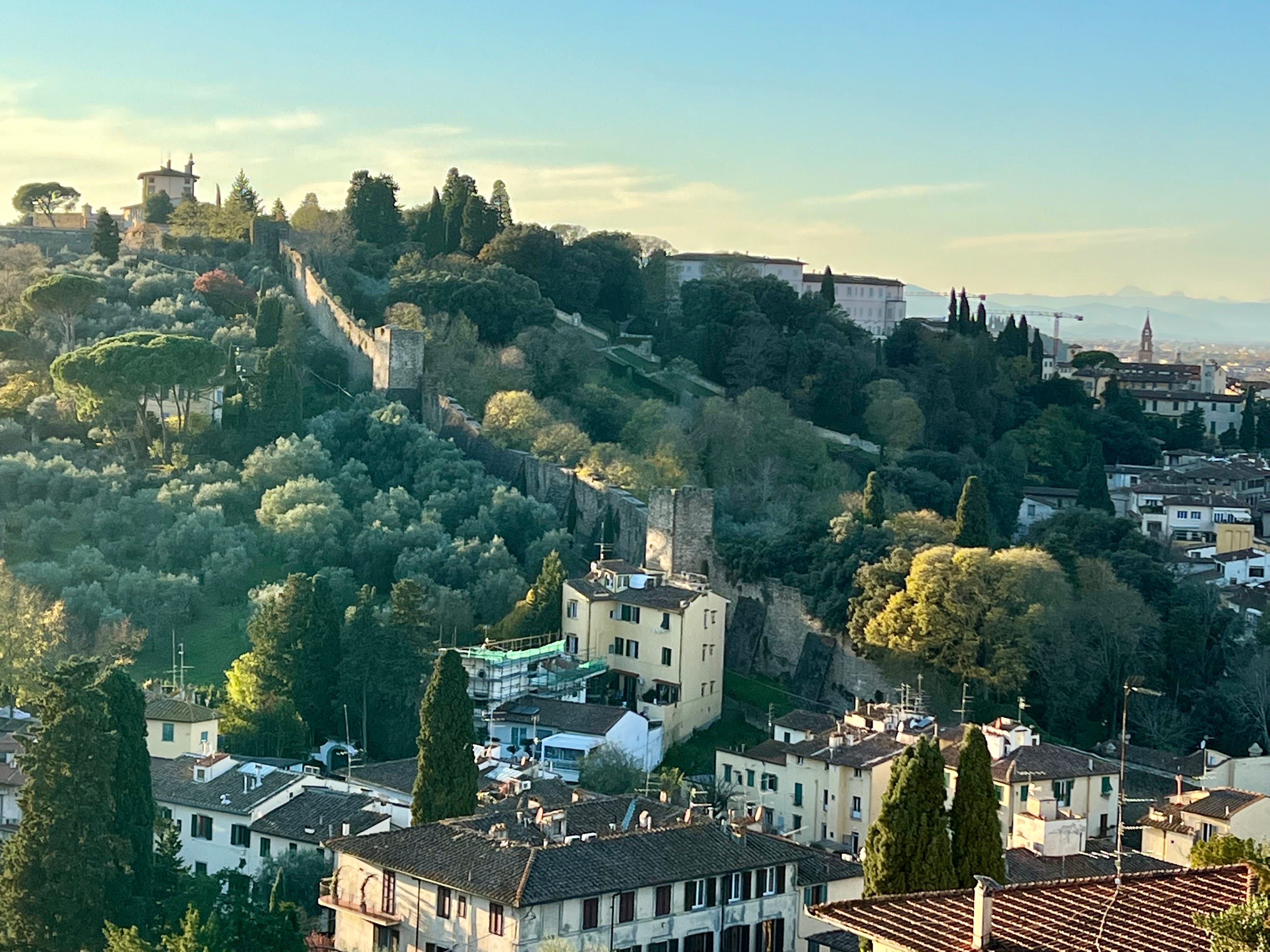
It’s very easy to get outside of the Florence city center, including on foot. If you cross the Arno into the San Niccolo neighborhood, you can then walk up the long, graded path to Piazzale Michelangelo. There you will get a beautiful panoramic view of the city. It can be crowded at sunset, but still worth the climb if you make it your evening passegiatta. From there, you can see the original city gates of Florence still intact. In fact, you will pass through them again when you re-enter the city.
Along the way, you will pass the Church of San Miniato al Monte, which has beautiful mosaics and is a delight to visit after hours when the church is still open, and the lights are on, causing the mosaics to glitter.
In the hills surrounding Florence, you will see villas that all belonged to the wealthy Renaissance families. They would have had their apartments and palazzi in the city and then their summer residences outside, where they could get the fresh breezes, especially in the summertime. Many of these homes are available today as vacation rentals, and a few are also hotels. If you’re traveling with family or friends and you want the extra space, this can be a lovely option. It’s also the perfect way to live out the Tuscan fantasy. Most of these places are not cheap, but if you’re going to stay in Florence for a week, it might be worth it
A Five-Day Itinerary
The detailed five-day itinerary, which includes restaurants, recommendations for leather shops, wine bars, and tours I recommend, is available to paid subscribers. Please upgrade your subscription to keep reading.
