


Join me on June 25th at 8 pm ET for Destination Deep Dive: Ischia. Since Naples is your point of departure for the island I like to call paradise for normal people, I have also updated the Naples Deep Dive. Enjoy!
For years, and still today, people ask: Isn’t Naples dangerous?
Naples is very safe, but it’s not a living museum like Florence or Venice. It’s densely populated and there’s crazy traffic, graffiti, and frequently overflowing trash cans, but that’s also because the local population hasn’t been relegated to the periphery as they have in Italy’s most touristed cities. If you would like a colder read on safety, know that Milan has the highest crime rate in Italy. Second is Florence. Naples is 13.
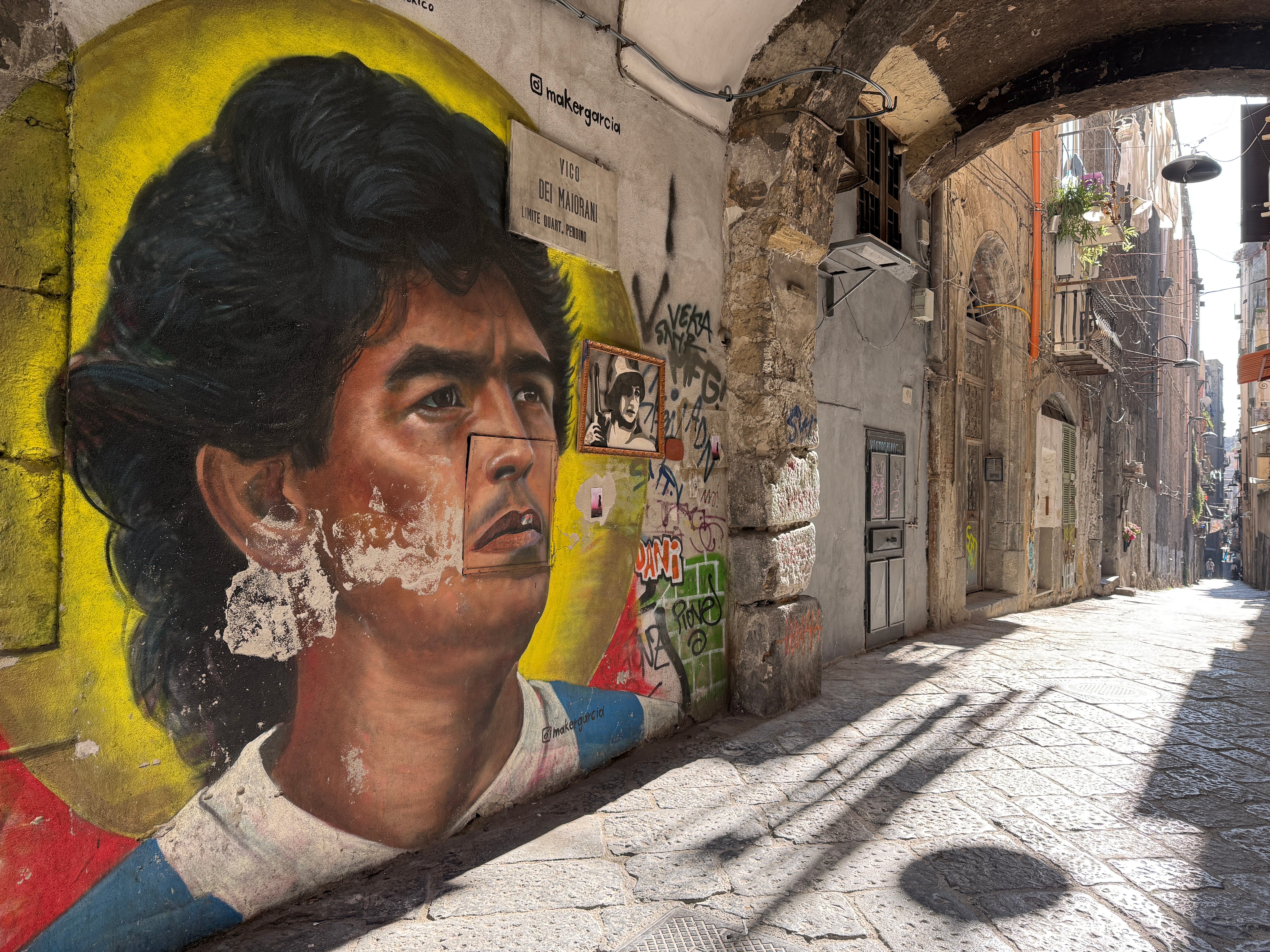
In the past, a dangerous reputation was more rightly earned. Much of that was a direct consequence of World War II. Fascism had destroyed the mafia in Italy, and many of its leaders fled to New York. Then the Allies used the Italian American mafia to serve as informants at the ports to oust the Germans. In the aftermath, a black market emerged in the final years of the war, with the mafia controlling the supply and distribution of basic goods. Elena Ferrante’s “My Brilliant Friend” depicts this through the character of Don Achille and the mafia's metastasis, as portrayed by the Solara brothers. There is still organized crime in Naples. It’s called the Camorra — every region has its own brand, as you may know from the book, movie, and television series Gomorrah (a play on Sodom and Gomorrah, and also on the local pronunciation of Camorra). It still exists, but like any business, it has transformed and will not affect you as a tourist.
Naples is the most dynamic city in Italy right now. And if anyone tells you otherwise — specifically, a travel agent who insists you should stay in Sorrento instead — this is their agenda: Naples has only a small handful of commissionable hotels. Agents who don’t charge a fee and work on commission need you to stay in Sorrento where commissions are abundant. This is a huge piece of why outdated stereotypes persist.
What Makes Naples Special
A few things that set Naples apart from every other city in Italy:
It is among the oldest continuously inhabited cities in the world. The historic center is nearly 3,000 years old.
Every neighborhood has its own character. Naples is not a cohesive city the way Florence is, where the historic center is all one nice circle. Every neighborhood, called a quartiere or rione, has its own culture, its own vibe, almost its own identity. You are, in a sense, traveling between different experiences within a single city.
It is the very best day trip city in all of Italy. Capri. Ischia. Sorrento. Pompeii. Herculaneum. Caserta. Baia. You can go wine tasting, hike the slopes of Vesuvius, go to the beach inside the city, or visit incredible hot springs just outside it. There’s no better city in Italy for day trips. I would venture that there’s no better city for amazing day trips in all of Europe.
The food. More on this below, but the short version is this: it is the Italian food people come to Italy for: Pizza and pasta with tomato sauce. It’s easy to eat well and inexpensively in Naples.
The Metro. Built in the 90s (which incidentally sparked a ton of archaeological exploration while they were digging), it’s easy to use, tap-and-pay, and costs about a buck fifty. You can get around the whole city that way. Which is good because the traffic is madness, and you do not want to be in a taxi unless you have to.
My Strategy for Crossing the Street
The traffic in Naples is something you have to experience to understand. Crossing the street for the first time is overwhelming. But here’s the trick: find a rabbit, by which I mean, someone to follow. On your first day, find an elderly person or someone pushing a baby carriage, and watch what they do. They will just step out into traffic, and the traffic will slow for them.
What you will quickly realize is that there is actually a lot of human connection happening. And I know this sounds crazy if you’ve never been to Naples before, but I actually feel much safer crossing the street in Naples than I do in New York — because in New York, if you’re crossing when the light’s about to turn, someone will mow you down and say, “I had the right of way.” In Naples, they will actually look out for you.
The Three Most Famous Things
The Archaeological Museum (Museo Archeologico Nazionale di Napoli)
This is one of the three best museums in Italy and one of the best museums in the world. It holds all of the treasures from Pompeii, Herculaneum, and Baia. Originally a military barracks that was part of the Kingdom of the Two Sicilies — because southern Italy, up until 1861, was its own kingdom — it got converted into a museum during the 18th century, when King Ferdinand and Maria Carolina (who was the sister of Marie Antoinette) were on the throne and Pompeii and Herculaneum were being excavated. As they pulled all these incredible things out of the ground, they needed somewhere to protect them, and eventually, the barracks became so full of amazing stuff that it had to be turned into a museum.
It also houses the Farnese Collection, because Elisabetta Farnese from northern Italy married King Charles, who held the Spanish Bourbon crown and was king of both Spain and Naples-Sicily. She left her collection to her son. The Farnese Palace in Parma is still pretty salty about this.
If you have limited time, pair your museum visit with a trip to Pompeii—make sure you see the mosaic galleries, because what you encounter at the site and in the museum will form a complete picture.
The Veiled Christ
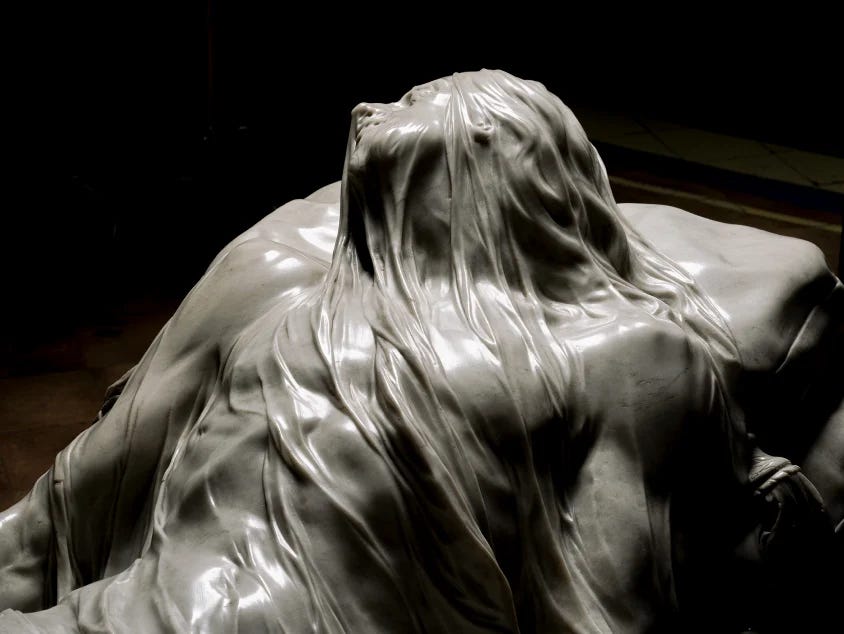
This is a sculpture made in 1753 by an artist no one has heard of — Giuseppe Sanmartino — and it is inside the Sansevero Chapel, which is still privately owned. It is carved out of a single piece of marble. The veil draped over the figure is so fine, so impossibly rendered, that I promise you have never seen anything like it and you will never see anything like it again.
This is the one thing in Naples where I think you should buy tickets in advance on their website. It’s a small space, they limit entry to timed groups, and it has become quite popular. For most other things in Naples, you can generally just show up — but not here. And they are very strict about no photography inside, which means it’s hard to get a real sense beforehand of just how extraordinary this sculpture is.
Pizza
Who on earth doesn’t like pizza? It was invented in Naples. Yes, there are flatbreads throughout history that sort of gesture toward it, but pizza as we know it today was invented here, and the reason we have such great pizza in New York is that so many pizzaioli — pizza makers — emigrated from Naples to New York City.
Neapolitan pizza is very particular. It is almost like a tandoori bread: puffy on the outside, paper-thin, and a little soggy in the center. You eat it with a knife and a fork. If the dough is good, it should be light as a feather, and you could honestly eat two of them despite how big they look. They’re cooked for just 90 seconds in the oven. Pizza is a religion in Naples. People will argue endlessly about where the best one is. My honest take: I’ve been to places Neapolitans consider mediocre, and I still thought they were pretty damn good. But the ones you really can’t miss are Sorbillo (there’s one on the Lungomare) and 50 Kalò, which is another personal favorite.
Food
The food in Naples is the Italian food that people come to Italy for. If you’ve ever done a Northern Italian lakes trip and found yourself staring down a lot of risotto and trout, wishing for pizza and pasta, Naples is your place.
