


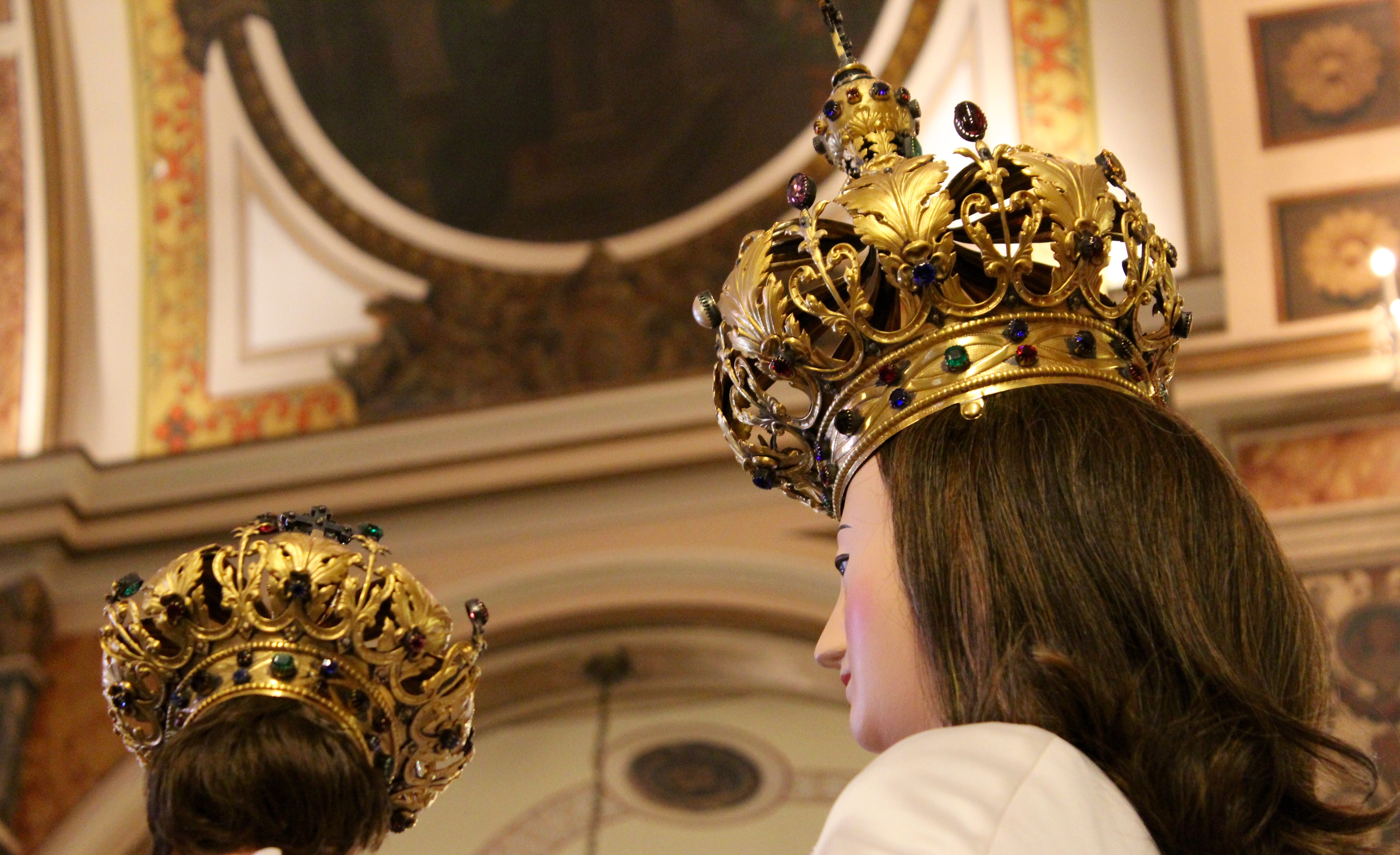
Every year on this day, my mind goes back to that room behind the choir balcony in the church of Our Lady of Mount Carmel on 115th Street: I am standing before a miracle-working statue of the Madonna.
For over 140 years, she has been the focus of intense religious devotion, kept above the altar of this church, so she can be prayed to and adored. She has been carried in processions that have cumulatively been attended by millions who made pilgrimages barefoot.
She is considered so spiritually powerful that Pope Pius X coronated her in 1904, making her one of only three sacred images with this designation in the Americas. But when I saw her up close, she was undressed and bald, her wig being replaced. She was quite literally laid bare in front of me.
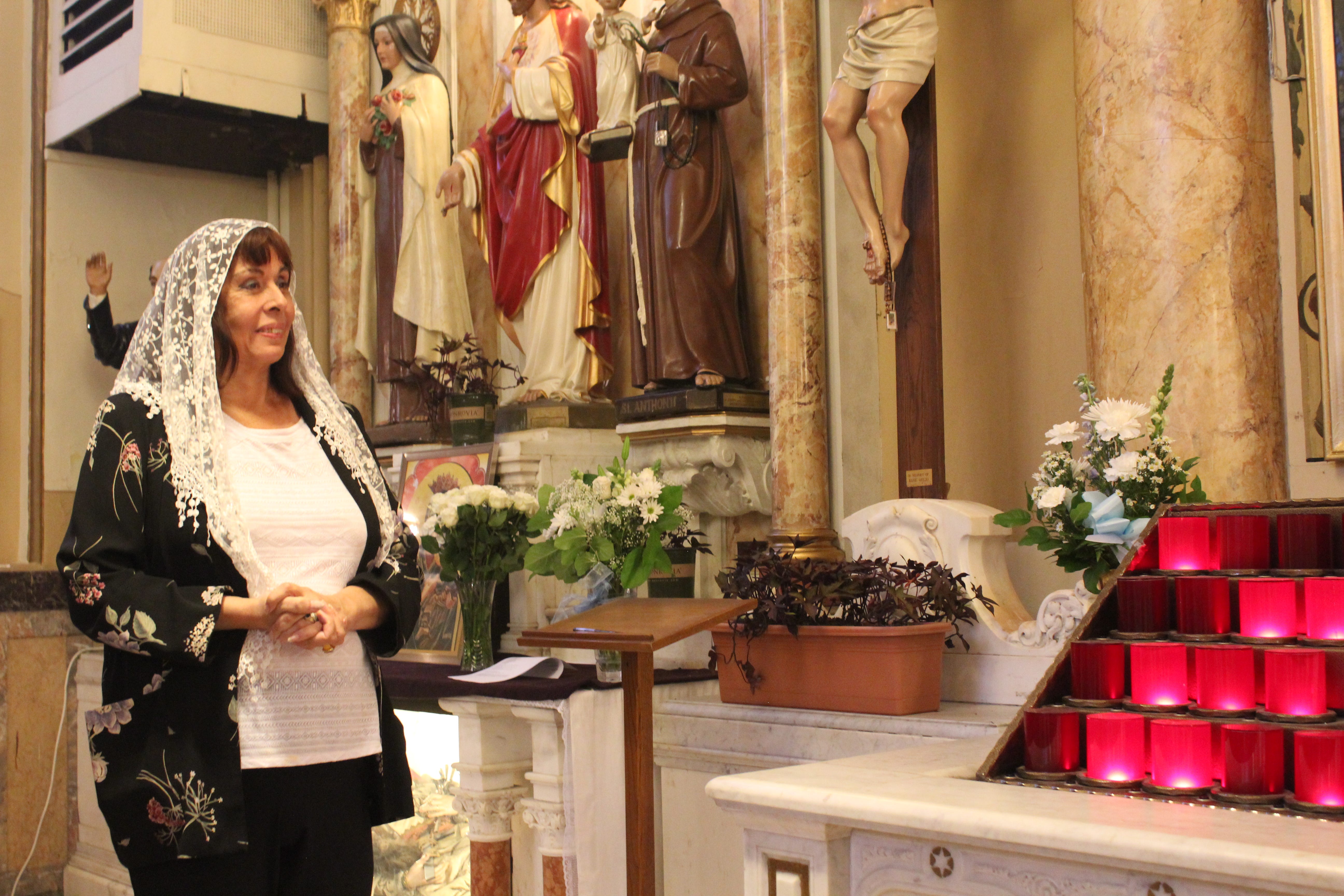
I looked directly into her painted eyes. Should I pray? Should I speak my deepest desire now into the re-fabricated ear of this image at this moment, which seems to be just a maquette? I looked to Antoinette Scarpinetto, a lifelong devotee of the Madonna who was overseeing her conservation.
“After 131 years of making miracles, she certainly deserves a spa day,” she joked.
In the twenty-teens, I was writing for major publications such as Condé Nast Traveler, Gothamist, and the UK Independent. Or, well maybe I should say, I was doing a lot of pitching, because most of the stories were rejected. I pitched this particular story, about the ongoing makeover of a miracle-working statue, to NPR journalist Jacki Lyden. At the time, she was developing a podcast called “The Seams,” which focused on clothing and fashion in modern culture. She loved the pitch and led the story, which aired on the NPR Sunday-morning national broadcast. I was quoted in the broadcast as an art historian and was also the fixer and the photographer. This essay is an excuse to finally share many of those old photos that have been hanging out in my iCloud.
The Origins
The nearly life-size statue was made in 1884 by artisans in Polla, Italy, for Italian immigrants living in East Harlem. Italians were first brought to northern Manhattan in the 1870s by an Irish American contractor to be used as strikebreakers on the First Avenue trolley tracks. The population grew and moved northward. In 1881, immigrants from tiny Polla formed a mutual aid society named for Our Lady of Mount Carmel. In 1882, they organized the first festa on the first floor of an apartment house on 110th Street near the East River. They prayed the rosary and then ate a huge meal together.
In 1883, an Italian priest joined and celebrated Mass and spoke about the Madonna's miracles in Polla, and in 1884, a statue of the Madonna was sent from Polla.
Her first gown was a traditional brown frock, decorated with hundreds of wedding rings, bracelets, and watches donated by the faithful. The gold-laden gown served as a savings account for the mutual aid society. A thief might steal from the chapel where she was displayed, but never from the Madonna's herself.
The building of an Italian church was also initiated in 1884, though it was over the border of what was a German and Irish neighborhood. The Italians begged for it to be named for the Madonna of Mount Carmel and promised their physical labor to realize the building.
After long days of backbreaking physical labor, men donated their time to build the church at night, by gaslight. When the use of free labor was publicly criticized, women took over the job, and the church was completed. But immediately the Italian community was relegated to the basement, as they found no favor among the Irish and German clergy who disapproved of how they practiced Catholicism. The Italians and the Madonna would not be allowed in the basilica until 1919, even though they made up the majority of the congregation.
Robert Orsi’s outstanding book The Madonna of 115th Street is a detailed chronicle of this community’s search for identity and legitimacy in the United States, wrapped around this particular image of the Madonna.
The Pope recognized the miracles occurring in East Harlem and officially crowned the icon in 1904 before a crowd of nearly 500,000 pilgrims who gathered along the East River. The East Harlem Italian community, once the largest in the United States, has long faded, but a small group of descendants, now bolstered by a much larger group of Haitians who find deep spiritual hold with this Madonna, continue the feast.
The Makeover
In 2015, the physical statue itself had been decaying for a long time. And because of this story I was working on, I had this strange, exquisite privilege of being so close to her.
Back to that room with the undressed Madonna, I couldn’t anchor myself in the vast space between what this statue meant, emotionally and historically, and the object itself. So instead, I began peppering Antoinette with questions since she had grown up in the last gasp of the Italian community in the neighborhood that orbited around this Madonna.
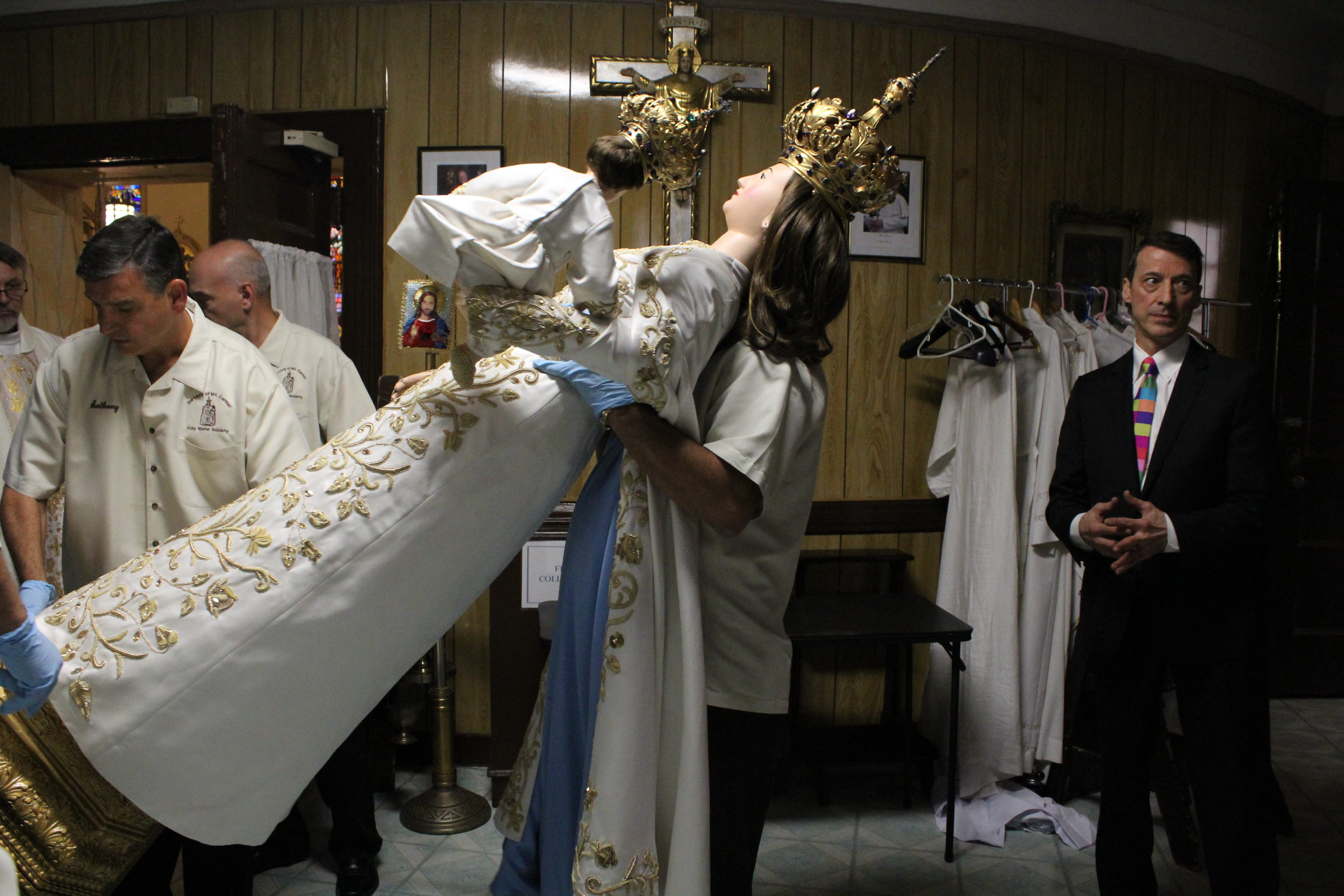
She was tall and strong, with a deep, raspy voice and an accent that could only be identified by native New Yorkers as distinctly East Harlem. She kept her hands folded before her, and when moving the statue, held it tenderly, like a delicate, beloved family member. Antoinette’s husband was an artist who built Mardi Gras floats in New Orleans and who had the technical skills to rebuild the Madonna’s face and body. The wig, made from human hair, was also deteriorated and replaced with one that gave the Madonna a chestnut blowout.
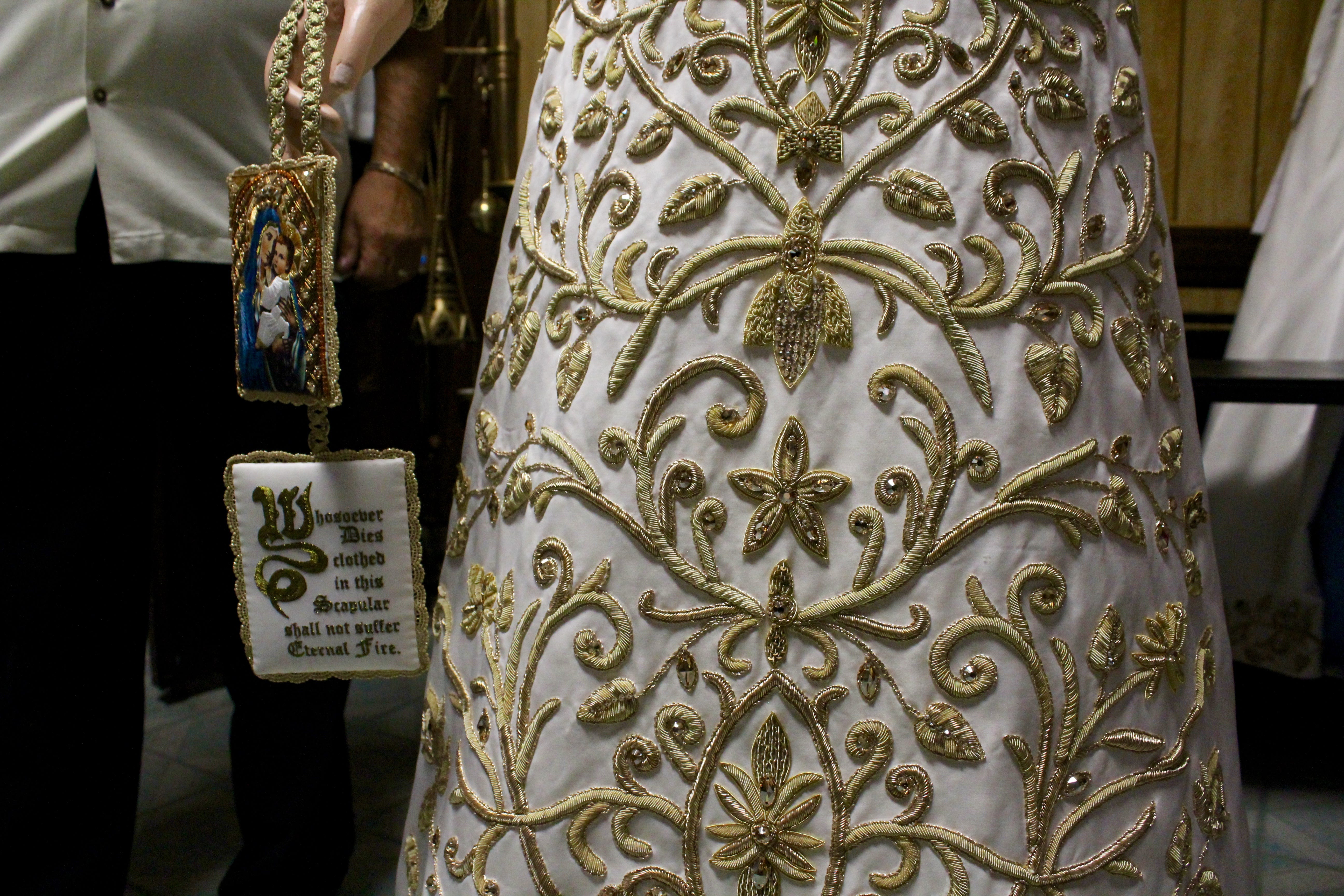
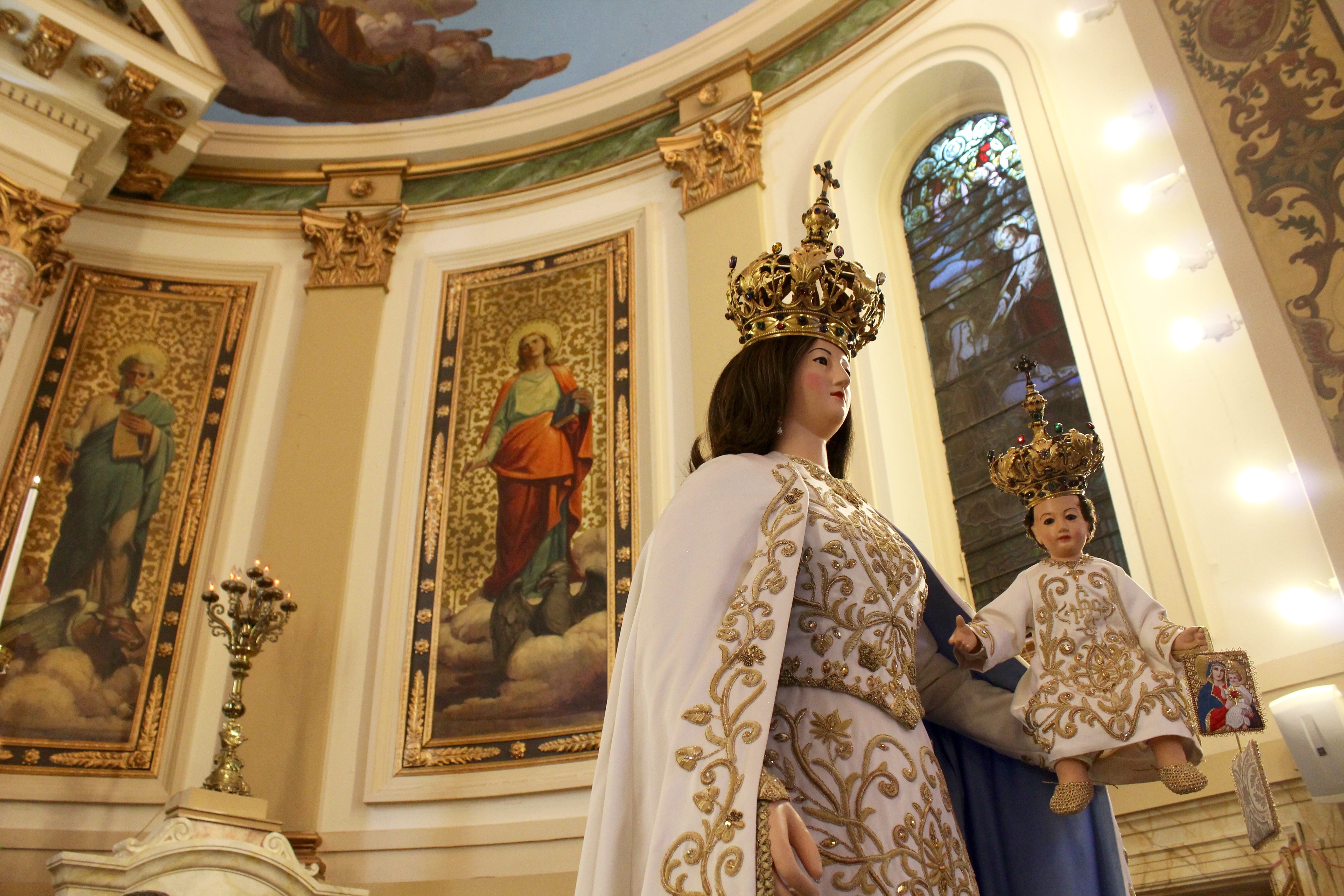
For the Madonna’s new clothes, Antoinette and her committee enlisted Linda and Tom Platt, fashion designers whom they knew from Rao’s, the East Harlem institution that remains one of the hardest places in the world to get a reservation. By the 1950s, the dress had been updated from simple brown to a much more regal blue, white, and gold, a lavish upgrade embroidered with gilt in a style you’ll find in other hilltown villages in Southern Italy. The great honor was given to a seamstress in Astoria, Queens, and was even written about in the New York Times.
It wasn’t clear at that particular celebration, but that was the beginning of the end for the East Harlem Italian community. The apartment stock in the neighborhood was so terrible that the Italians lobbied the city for new housing. They succeeded, but by the time the new apartment houses were completed, Italians were no longer arriving in large numbers, and many were now moving to the outer boroughs or the suburbs. Those new apartment houses became home to people arriving from Puerto Rico, which is how the neighborhood came to be known as Spanish Harlem. The annual celebration was almost extinct by the early 1990s until Haitian women found the Madonna. They reinvigorated her devotion, and the dress made in 1954 was treated by conservators at the Metropolitan Museum of Art. But accumulated damage from electric lights in the Madonna’s niche above the altar meant an entirely new dress was needed once again.
Antoinette had the Madonna removed to the secret spot in the church where she would be cleaned and repainted. A conservator created new patterns for the dress based on the original designs. Tom Platt regularly visited to do muslin fittings since the committee forbade the Madonna being relocated anywhere beyond the church. The Platts couldn’t find anyone with the hand skills to recreate the dress’s embroidery, but found competent talent in India, where the dress was then sent.
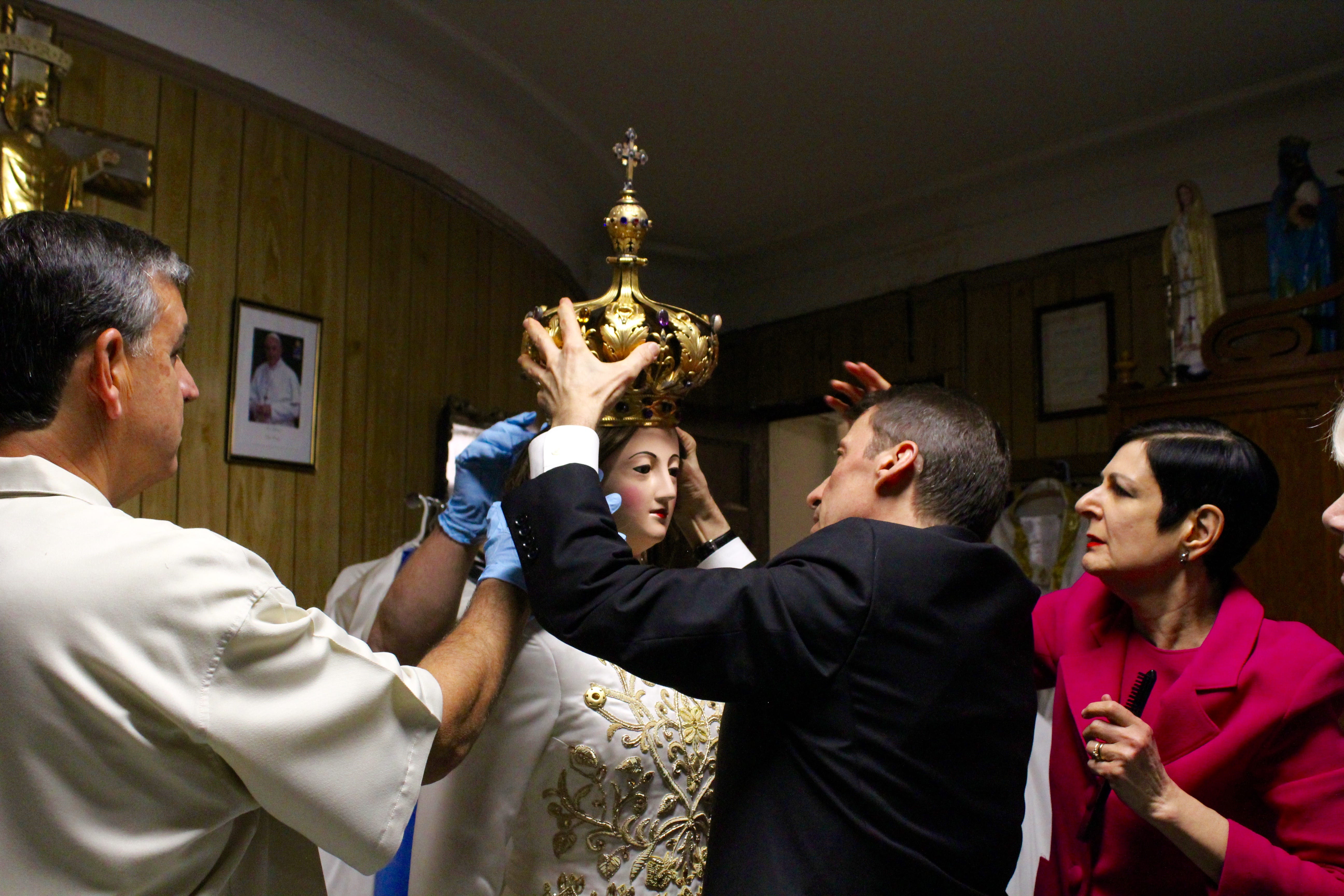
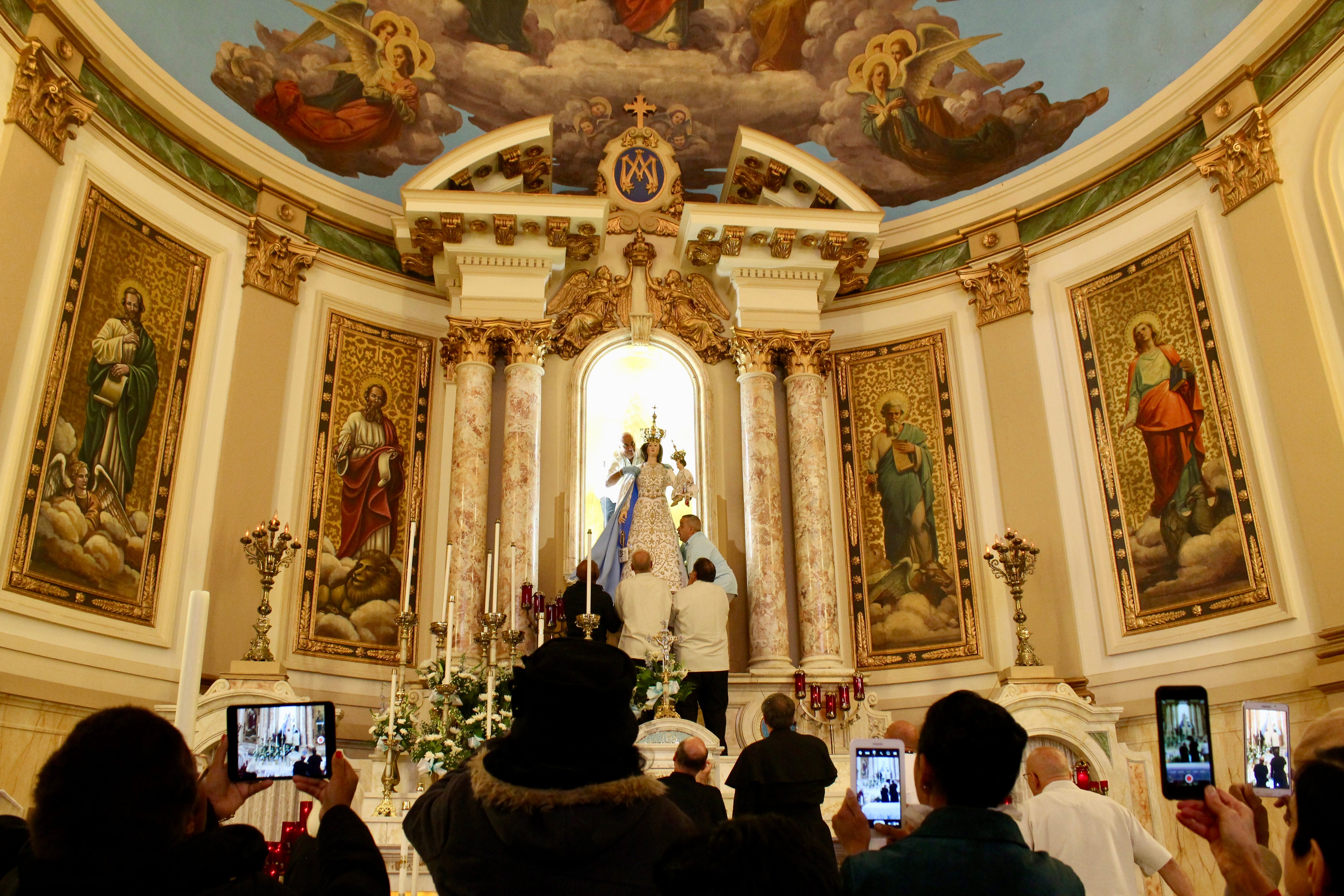
At that moment in 2015 when I first saw her, the dress hadn’t yet arrived, but Antoinette told me I could see it, along with everyone else, at the Mass that November, when the refreshed Madonna would be debuted to the community. Jacki and I were both there and watched the Madonna being prepped behind the scenes like a pop star getting ready to take the stage.
Distant Shores
Why are there so many churches dedicated to Our Lady of Mount Carmel in New York? The reason, like so many other goddesses from Southern Italy, comes from the sea.
The Carmelites were founded in 1155 by Christian hermits and former Crusaders living near the spring of Elijah on Mount Carmel, which is near Haifa, Israel. In 1238, the first group left for Cyprus and Sicily, and later arrived in Naples in the 13th century aboard Amalfitan merchant ships that regularly traversed the waters between Southern Italy and the Holy Land, carrying ivories, spices, and Crusaders. They brought with them a Byzantine icon of the Madonna that they had venerated on Mount Carmel itself. She became known in Naples as the Madonna Bruna for the simple brown frock that adorned the Madonna and a scapular that offered protection from this mortal coil. A scapular is just a scrap of cloth with an image on it, accessible to even the poorest citizens.
The most important church dedicated to the Madonna of Mount Carmel, more affectionately called La Madonna Bruna in Naples, in the Piazza Mercato. When Italians were emigrating en masse at the turn of the 20th century, this church was the last one they would pray in before boarding ships. She is the Madonna to whom they promised to dedicate themselves if she kept them safe on the journey. The fulfillment of that promise is why there are so many Mount Carmel churches across the United States.
At the Mass to show the Madonna off to the community for the first time, the priest told the congregation she had come out of the beauty parlor — a spiritual beauty parlor, he called it — rejuvenated. New hair, he said. New face. New hands. I watched Antoinette, a full foot taller than anyone on the altar, gracefully curtsy before the image, an old-fashioned crocheted veil atop her long, dark hair. In a flash, I felt as if I saw her as a young person, doing what all the other women around her did.
The Madonna of 115th Street Persists
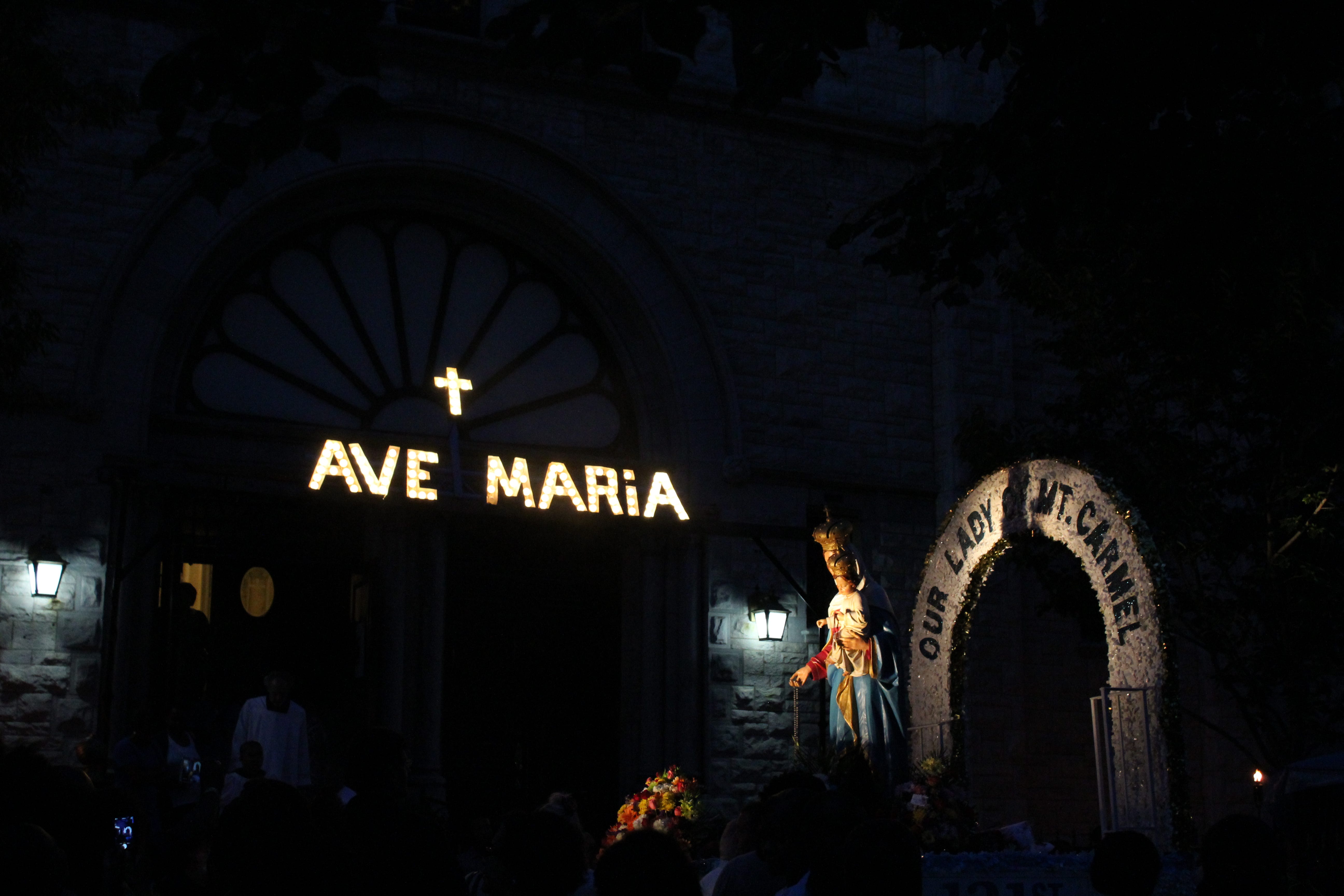
Last night, a candlelit procession, accompanied by an NYPD squad car, laced through the streets of East Harlem. It ended in the church with a vigil and then a midnight mass. On Saturday, July 18th, the pilgrimage will be reenacted, complete with barefoot penitents approaching the altar on their knees. In Brooklyn, at another Italian church named for the Madonna of Mount Carmel, the annual Giglio festival is now complete, merging the ancient traditions of Nola, a town just outside of Naples.
The Madonna, like Venus and Aphrodite, whose stories have been adapted and transformed, washed up on many shores around the world. I see her when I walk my dog around my New Jersey neighborhood, with Manhattan’s skyscrapers visible, and the architectural landscape in flux. There are the small brick houses, still occupied by an older generation of Italians, who still have the once-ubiquitous “Madonna on the Half Shell” on their front lawns. These homes and their adornments are in stark contrast to the new houses that immediately go up when these old homes are sold and inevitably demolished, in favor of a large two-family cube with no grass or trees around it, so that square footage can be maximized and sold for two million dollars. Instead of Mary in front of the house, there is an EV charger.
Every July 16th, I think about that encounter with the exposed Madonna and try to parse what I believe. I am continually drawn to places and ideas that have been reimagined and redesigned, especially now because the last twenty years have been a hinge point in history. I think we’re all trying to locate ourselves in a vast space, where we’re not yet sure what all this change means. And when people feel lost, they often look for their mother.
This is gold.
Luminous, thank you! 🩷