


Italy is enraptured with the North American pumpkin aesthetic. You will find pumpkin festivals - festa della zucca - for kids, which are New England-style hayrides. Halloween, or ‘allo-win,” said with an Italian accent, is now a seasonal fixture. But November 1st ushers in pomegranate season. It’s also the official end of tourist season in the south, when most hotels and resorts outside cities close for the season. Everyone enjoys a much-deserved rest while the owners wait for an update from their bookkeeper on how to price rooms next year. If you’re trying to book something now that appears completely sold out, the property’s owners are more likely taking a break, and their website hasn't been updated for 2027 yet.
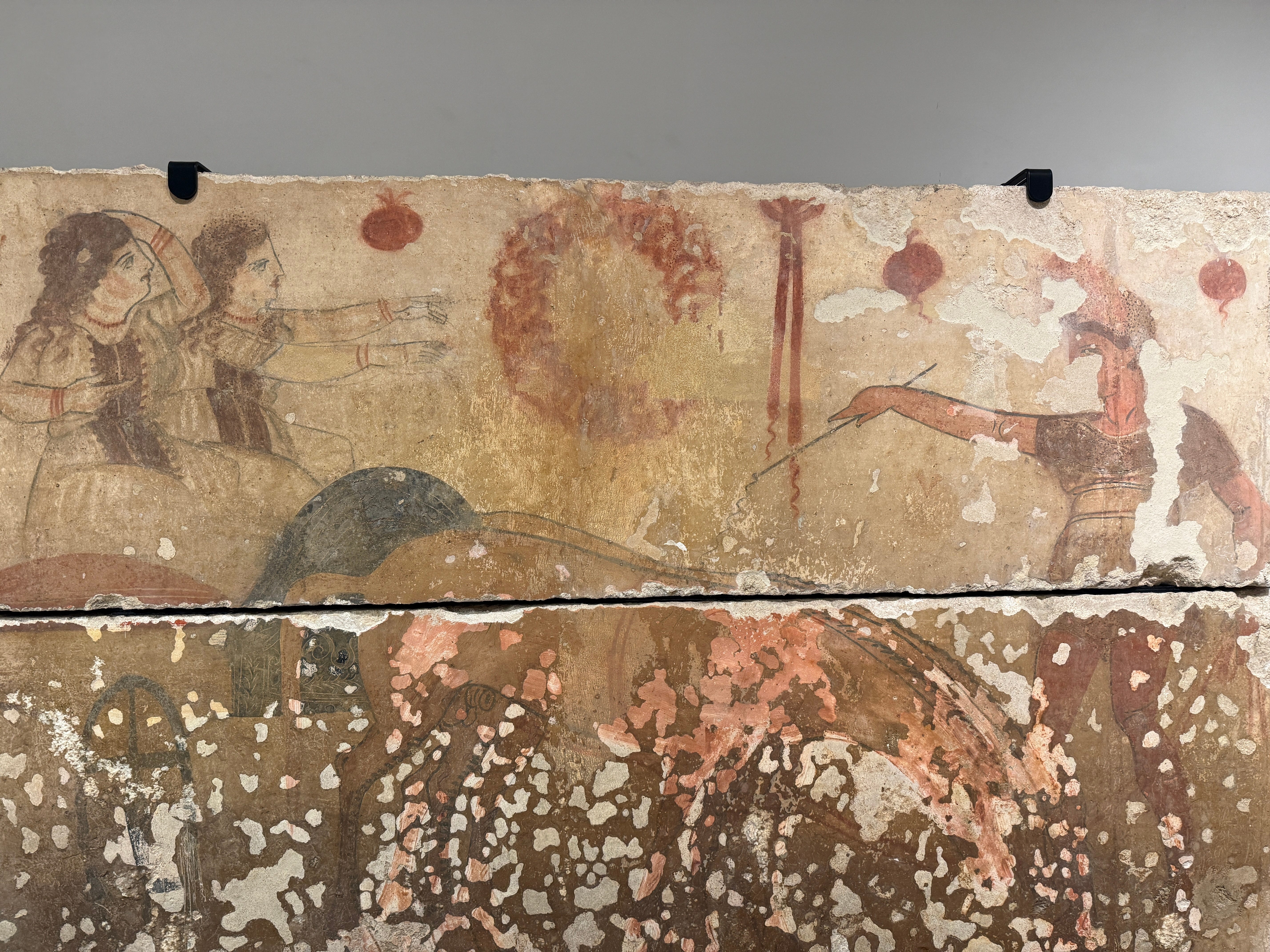
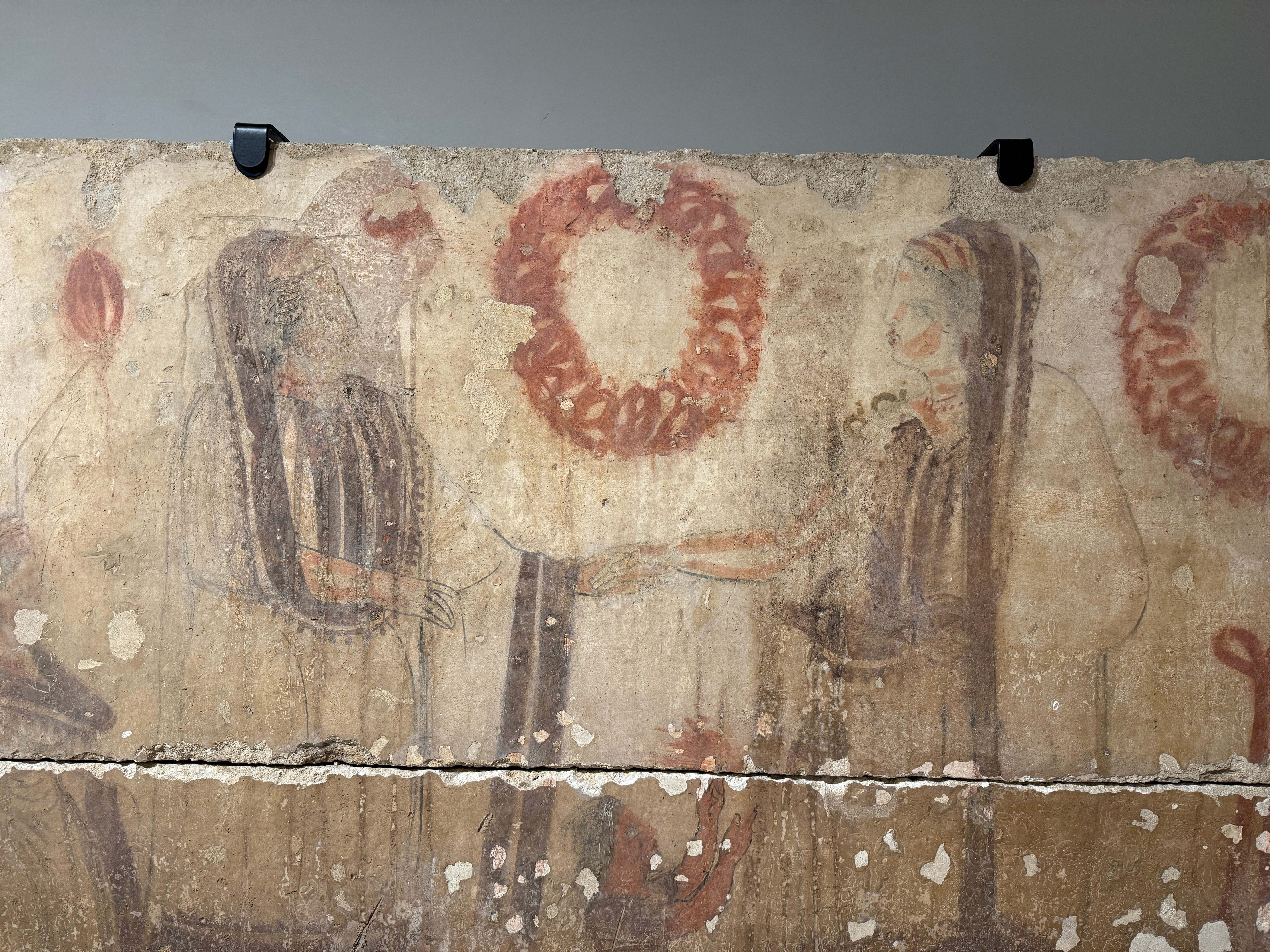
Pomegranate season is this sad, ravishing period when nature’s bounty falls to the ground and sinks into it to enrich what’s coming next. You can see how the ancients of southern Italy metabolized this passage on the walls of their tombs, where pomegranates abound as their hopeful totem. The archaeological museum at Paestum has been newly installed with hundreds of objects from tombs that have been locked away in storage for decades. There are so many “new” things to see; I was absolutely giddy running around trying to take it all in before the museum closed for the day.
In a newly displayed Lucanian tomb, probably from around 250 BCE, we see people despairing as they leave, their things packed onto horses and mules, with grief-stricken women tearing at their hair as they wave goodbye. On the other side, the woman who has passed gently places her hand in the outstretched hands of the one waiting for her. Look closely, and you will see a young boy, also joyful to be reunited.
To celebrate pomegranate season, this month’s Ask Me Anything About Italy is open to all subscribers, not just paid ones. November is always the quietest month for trip planning, which doesn’t kick into high gear until January. So if you’re reading this, that means you’re invited. This happens live, right here on Substack. Come with your questions, which you can type in the chat, or ask to come on screen with me, which I can do one at a time. You can ask a trip planning question, but also ask about history, culture, food — really anything Italy-related. I will do my best to answer. These monthly chats have become a fun hangout, and lots of people come just to listen and learn, not necessarily to ask a question.
Here’s the link to join: https://open.substack.com/live-stream/439493
Here’s what else is coming up:
November 23: Destination Deep Dive: Rome Part 2. Because there are so many ways to see Rome, this companion to the original will give you deeper cuts and ideas for those returning for a second, third, or tenth visit.
I’ve got several new podcast episodes in process that I hope you’ll love. Next up is an interview with historian Lauren Mancia, where we go deeper into the Niccolò dell’Arca Lamentation in Bologna. My Instagram post about it is currently at 800k views, and the response to this little-known piece gives me a lot of information about what people are seeking from art, and the obstacles that academia and museums put in the way.
There’s an upcoming episode about the links between Southern Italy and India during the Roman Empire, featuring Laura Weinstein, the world’s leading expert on the Pompeii “Lakshmi.”
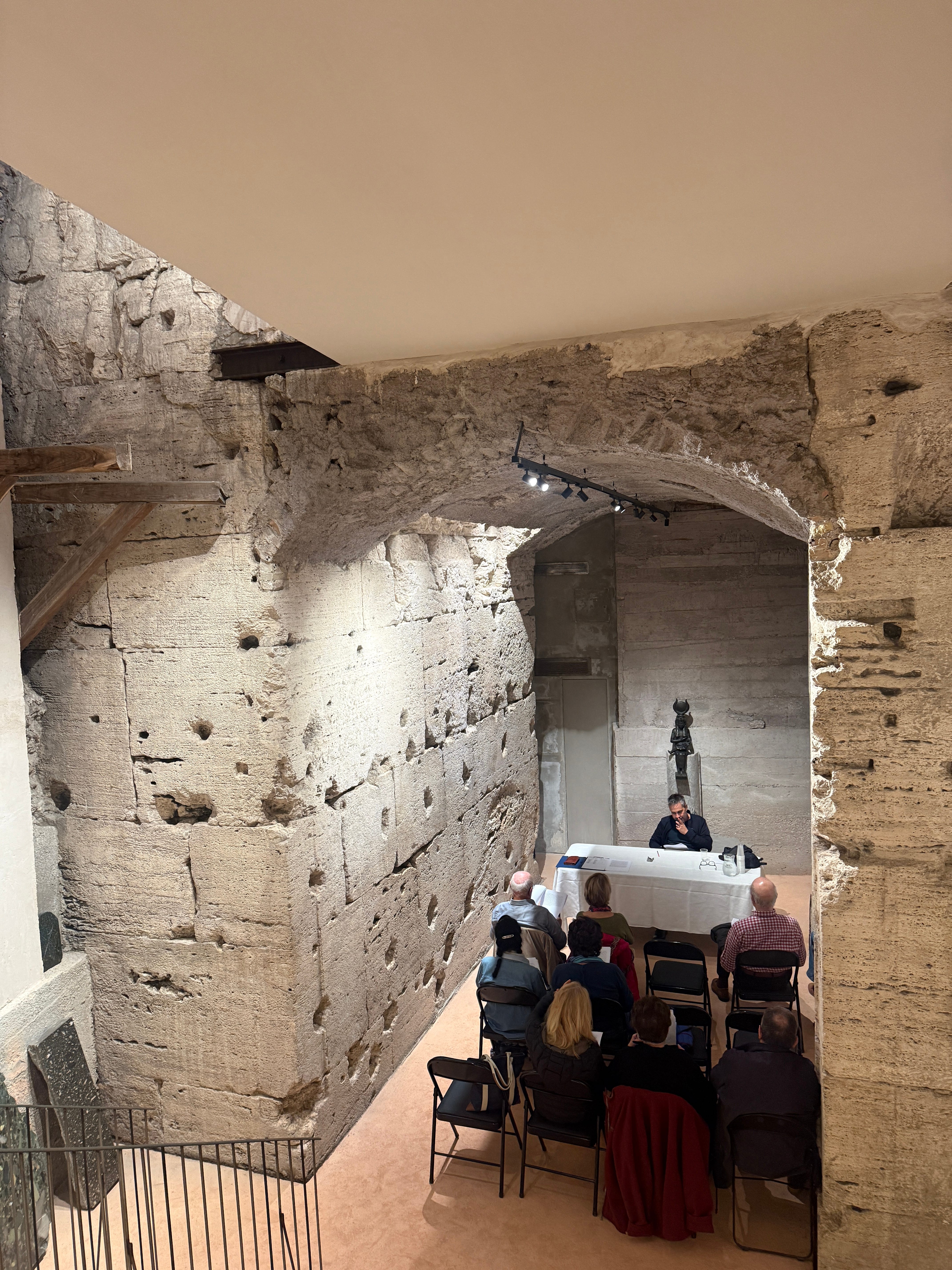
And the indomitable Margherita Capponi will be back to discuss the Temple of Isis she took me to see below a storefront in the center of Rome.
Podcast episodes are always free, but a paid subscription lets me go really deep. This newsletter and podcast let me do the work I wanted to do while working at the Cloisters, but couldn’t because academic work requires strict lanes and tight boundaries around who can tell what stories. Here, I can move throughout the world of academia to pull together stories, connect ideas, and show you why these people and places from the past still matter today.
The benefits of a paid subscription include the monthly Ask Me Anything and access to all of the Destination Deep Dives. But really, I think of those more as thank-you gifts than services, because the financial support is how I can afford to do this research and put in the time necessary to create a quality conversation about it.
Just renewed my annual subscription on Substack - so
much fun, curiousity and ‘attesa’ in all we talk about and that
Danielle offers us. Grazie di cuore, Danielle